
China’s regions are not interchangeable backdrops. The region a school chooses shapes what students can actually study there, which is why the destination decision belongs alongside the curriculum decision rather than ahead of it.
Beijing and Xi’an support historical and cultural inquiry. Shanghai supports business, innovation, and urban development. Yunnan and Qinghai support biodiversity, conservation, and sustainability fieldwork. Zhejiang supports outdoor progression, teamwork, and leadership. Most schools start with a destination and fit the learning objective to it afterward. Starting from the objective produces a sharper trip, and it usually narrows the options faster than a map does.
Together, these two cities give students the longest continuous view of Chinese history available on a single itinerary. Xi’an was the imperial capital that stopped being one. Beijing is the imperial capital that is still the political center. That difference is the lesson, not the backdrop to it.
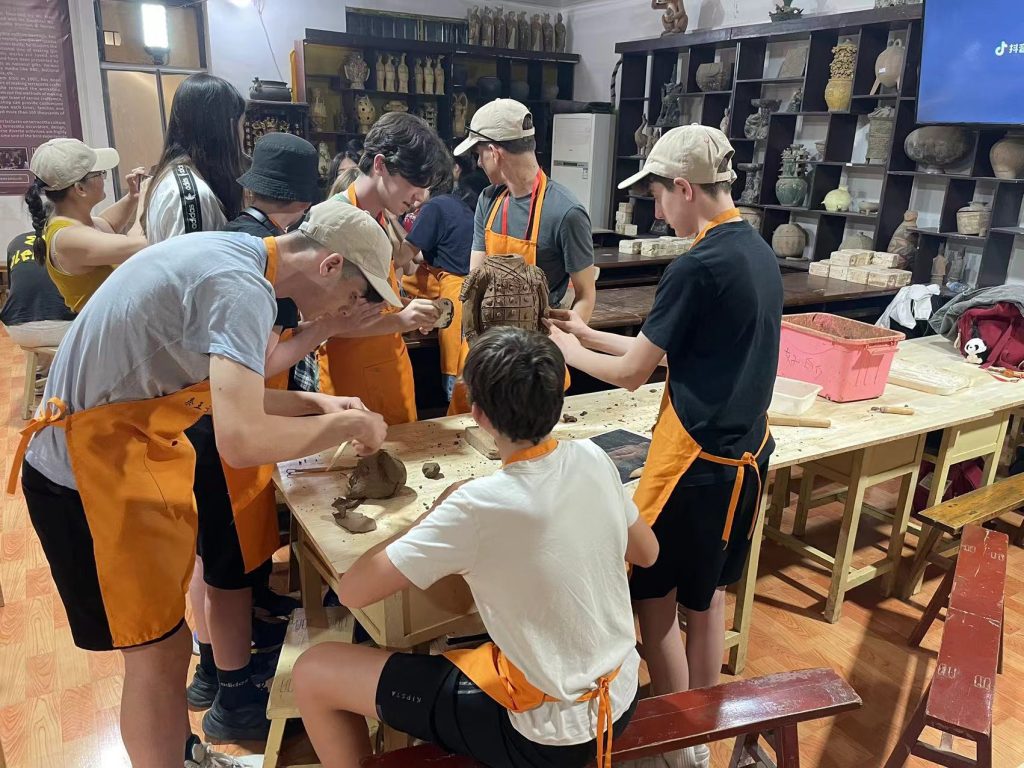
The Xi’an program pairs a visit to the Terracotta Warriors with a mini-Terracotta pottery workshop, then puts students inside the Geely car factory later in the same week. Ancient mass production and contemporary mass production, four days apart. Students also cycle the Ancient City Wall and run a scavenger hunt through the Muslim Quarter, where the Silk Road stops being a map on a classroom wall and becomes a street with food on it.
Beijing carries the governance and continuity content. Hands-on activities such as calligraphy, paper-cutting, Taichi, and community visits turn cultural heritage into something students actively practise rather than simply observe. Alongside the Forbidden City and the Great Wall, an ancient capitals journey sends students into the hutong alleys on a student-led challenge that requires them to use Mandarin with residents. Neighborhood-level continuity is easier to grasp from inside a courtyard than from a lecture on urban heritage policy.
Shanghai works for economics, business studies, and design thinking because students can move between a financial center, a working company, and a creative district inside the same day. The scale is the teaching tool. That innovation lens can extend into neighbouring Zhejiang, where students can see how technology is being applied at city scale, including a visit to Hangzhou’s AI “City Brain”.
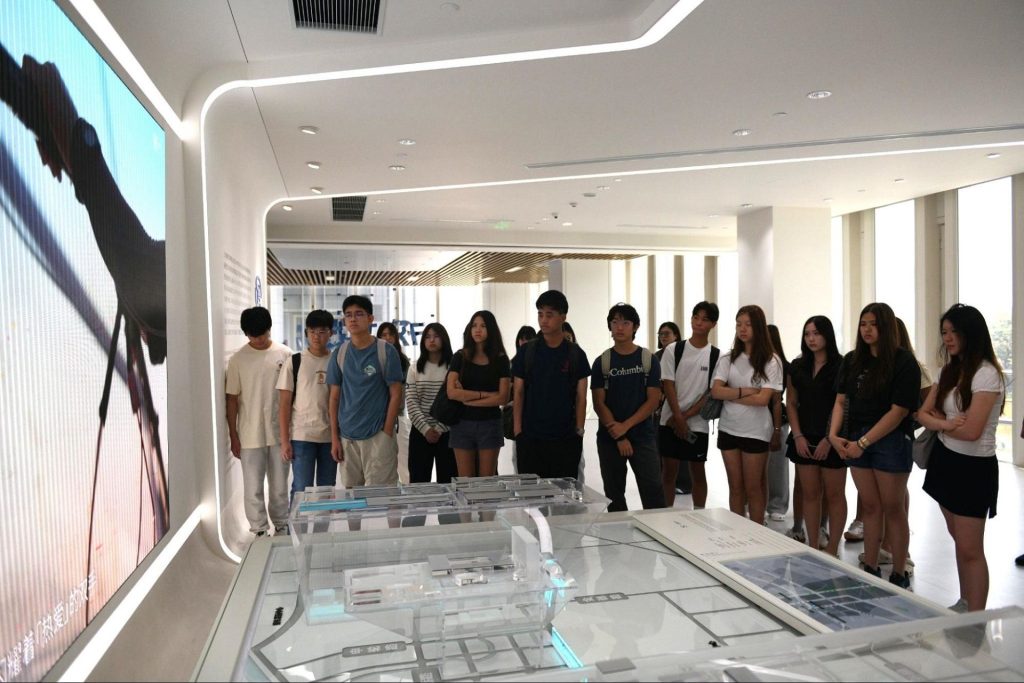
Digital China opens at the Shanghai Tower, then runs a university tech talk and a visit to Zhangjiang Hi-Tech Park before students walk the French Concession the same afternoon. Finance, research, and a district shaped by foreign concession-era planning, all inside a few square miles. The program then extends to Shenzhen for a DJI factory tour, a drone activity, and a scavenger hunt through the Huaqiangbei electronics market, which is where students usually work out how fast a supply chain can move.
For schools wanting the same city read through history rather than industry, Shanghai’s cultural landmarks covers the same ground with a different lens. And if the objective is comparative social studies, our guide to how cities and villages help students understand social change sets out that method in full.
These two regions give students conservation work that is actually happening, with named reserves, research stations, and species, rather than a nature walk with an environmental theme attached.
Yunnan’s northwest sits inside the Three Parallel Rivers Protected Areas, which UNESCO describes as an epicenter of Chinese biodiversity and one of the richest temperate regions in the world for it. The Shangri-La and Tacheng program runs a biodiversity workshop and cleanup at Napa Lake, then takes students to see the golden snub-nosed monkeys and into a local school exchange. Conservation and community sit in the same week because in Yunnan they sit in the same landscape.
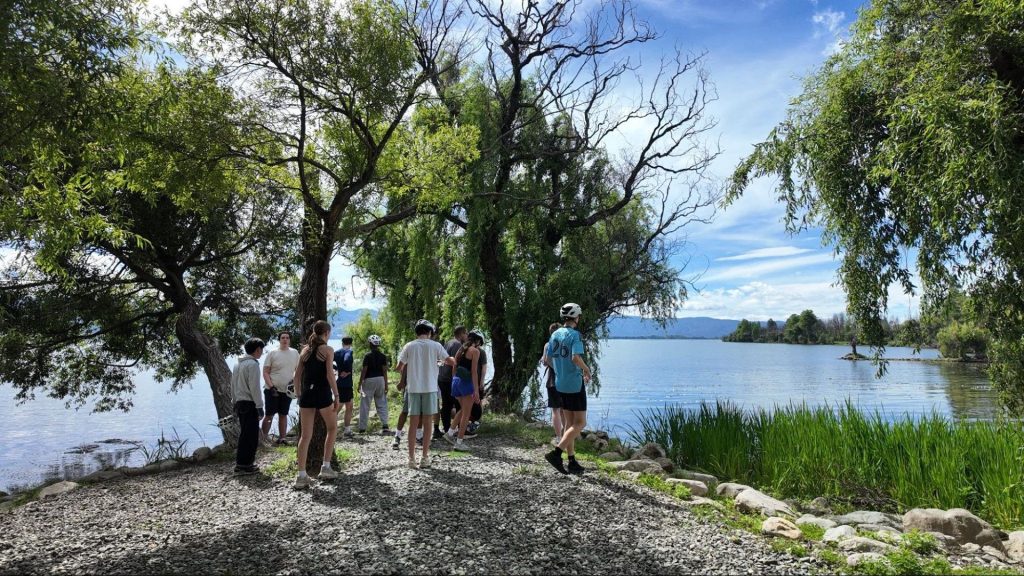
Qinghai works at a different scale. The Qinghai program opens with an expert talk at the Xiaobo Hu Eco Protection Station, followed by tree planting and bird watching at Qinghai Lake and a city development discussion the same day. Students then spend time on a Tibetan farm. Plateau ecology, water systems, and pastoral livelihoods are hard to separate here, which is the point for anyone teaching sustainability as a set of trade-offs rather than a set of good intentions.
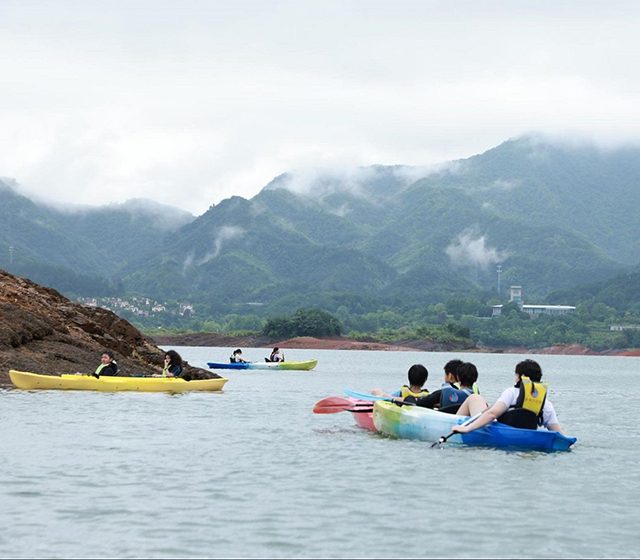
Zhejiang carries more of our outdoor and leadership programs than any other province, and the reason schools keep returning to it is that challenge, service, and cultural exchange can sit inside one short itinerary rather than three separate trips.
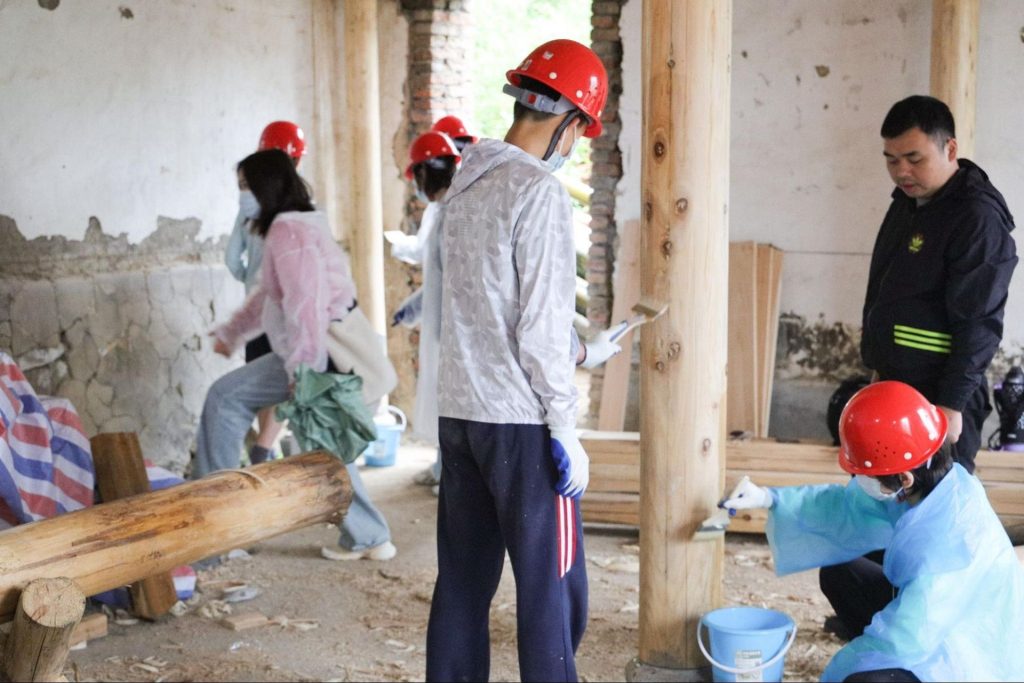
The Songyang Global Citizenship Retreat is the clearest example. Team challenges on day one, cycling the Songyin River and a home restoration service-learning project on day two, an eco-cleanup trek and a puppet workshop on day three, then a cultural exchange with a local school. Students restore a building with their hands and then meet the people who live in the town it belongs to.
The province also lets schools set the intensity. Moganshan runs wilderness survival, Anji runs mountain adventure, Xianju runs a survival camp, and Jilongshan is water-based. Same region, four different demands on a group, from physical resilience and teamwork to confidence and collaboration. Several Zhejiang locations also support Adventurous Journeys for the Duke of Edinburgh’s International Award, which matters if the trip has to count toward something.
On the pedagogy of building outdoor challenge by age group, our guide to what outdoor learning looks like at every level covers the progression in detail.
Start from the learning objective and the constraints, and the region usually selects itself. Every program is mapped to the UN Sustainable Development Goals it addresses, which gives schools a shared reference point when the trip has to answer to a curriculum framework rather than a wish list.
| Region | Best suited to | Example program | SDGs in focus |
| Beijing and Xi’an | History, heritage, global perspectives | Xi’an: From Ancient Chang’an to Modern China | Quality Education; Sustainable Cities and Communities; Responsible Consumption and Production |
| Shanghai | Business, innovation, urban development | Shanghai and Shenzhen: Digital China | Decent Work and Economic Growth; Sustainable Cities and Communities; Partnerships for the Goals |
| Yunnan | Biodiversity, cultural ecology, conservation | Shangri-La and Tacheng: Harmony in the Highlands | Sustainable Cities and Communities; Life Below Water; Life on Land |
| Qinghai | Plateau ecology, sustainability, cultural diversity | Qinghai: A Dive to the Scenery and Culture | Quality Education; Sustainable Cities and Communities; Life on Land |
| Zhejiang | Outdoor progression, teamwork, service, leadership | Songyang: The Global Citizenship Retreat | Sustainable Cities and Communities; Climate Action; Partnerships for the Goals |
Region does not guarantee outcome. Three things narrow the choice faster than anything else. How much time you have, including travel days rather than just program days. The age and physical range of the group, which rules regions in and out before any curriculum discussion. And whether your objective needs students to observe something, participate in something, or both, because that distinction usually decides the region on its own. The best programs build in both participation and reflection, giving students a chance to turn what they experience in the field into something they can discuss, question, and apply.
If you know what you want students to come back understanding, that is enough to start. Tell us the objective and we will tell you which regions can carry it. WildChina Education designs each program around the learning first.
© 2026 All rights reserved.
Terms and Conditions


